

The final stretch
Flavor matters beyond the first look.
Good flower should be worth coming back to. We care about the flavor and experience you take home, right through the final stretch before harvest.
We call this our 30 day flush: gradually easing back on nitrogen, adjusting feeding and following the plant’s response.

Nutrition changes more than plant size.
- Research shows that nitrogen supply can influence cannabinoid and terpene concentrations.
- In one controlled study, higher nitrogen was associated with lower concentrations of many of these compounds.1
Plant health still comes first.
The same study found that insufficient nitrogen restricted plant development.1
We consider feeding and plant health together, with the flower you take home as the priority.
EC is one check. Plant health gives it context.
- Watch the runoff.
We check runoff EC, or electrical conductivity, to track dissolved salts in the growing medium.
- Follow the trend.
Readings over time help us assess whether salt levels are decreasing as feeding changes.
- Read the whole plant.
We consider those readings alongside plant health, supporting maturity without unnecessary stress.
Read the research
Peer reviewed research shows that nitrogen supply can influence plant growth, cannabinoids, and terpenes. It also shows why balance matters: insufficient nutrition can restrict plant development.1
Runoff measurements can offer insight into the growing medium, but sampling conditions affect the readings. EC is one useful check; it cannot confirm that every part of the root zone is “fully flushed.”2
These findings inform our thinking. They don’t establish that our specific 30 day approach guarantees better flavor or smoother smoke.
Find a flavor worth returning to.
Explore the flower, or take a closer look at where it begins.
The Truth Behind the "30-Day Flush"
beyond the flush: the 30 day flavor curation process
The Myth of Starvation vs The Science of Maturation
For decades the cannabis industry has relied on flushing. This practice means flooding the plant with plain water for weeks before harvest to wash away nutrients. Modern agronomy tells a different story. Starving a plant in its final weeks does not improve flavor. It degrades it.
We do not starve our plants. Instead, we execute a meticulous 30 Day Nutrient Curation and Ripening Protocol.
Instead of cutting off the plant food supply, we tailor the diet down to the exact milligram. We gradually shift the nutrient profile to match the plant's aging cycle. This preserves the delicate organic compounds, such as esters and volatile sulfur compounds. These elements give our flower its unforgettable true-to-strain flavor and smooth burn.
The Three Pillars of The Final 30 Days
Pillar 1 (Days 30-45):
Targeted Nutrient Curation

What We Do: We completely remove nitrogen from the feeding program. Excess nitrogen delays crop maturation and causes a harsh green taste. At the same time, we heavily prioritize critical immobile nutrients like calcium and microelements.
The Flavor Impact: This mirrors autumn in nature. It triggers a natural degradation of chlorophyll. The process signals to the plant to stop growing green vegetation and put all energy into producing complex flavor compounds.
The Science: Research shows that flower tissue mineral content locks in weeks before harvest. Providing a specialized nitrogen-free mineral block prevents the cell wall breakdown and deficiencies that cause bud rot. It keeps the plant metabolism optimized while forcing a beautiful natural color shift.
Pillar 2 (Days 45-60):
The Clean Transition
What We Do: We transition to ultra pure reverse osmosis water paired with precise potassium and magnesium levels. This encourages the plant to finish its life cycle and metabolize its remaining internal sugars.
The Flavor Impact: This gentle transition allows the plant to naturally use up stored starches. It eliminates the heavy throat-burning smoke associated with improperly finished crops.
The Science: Blind taste tests by industry experts show that plants finished with a tailored transition rank higher for robust flavor profiles compared to plants subjected to harsh water only flushes. It allows a controlled removal of accumulated salts without causing sudden starvation stress.
Pillar 3 (All 30 days):
Environmental Sculpting
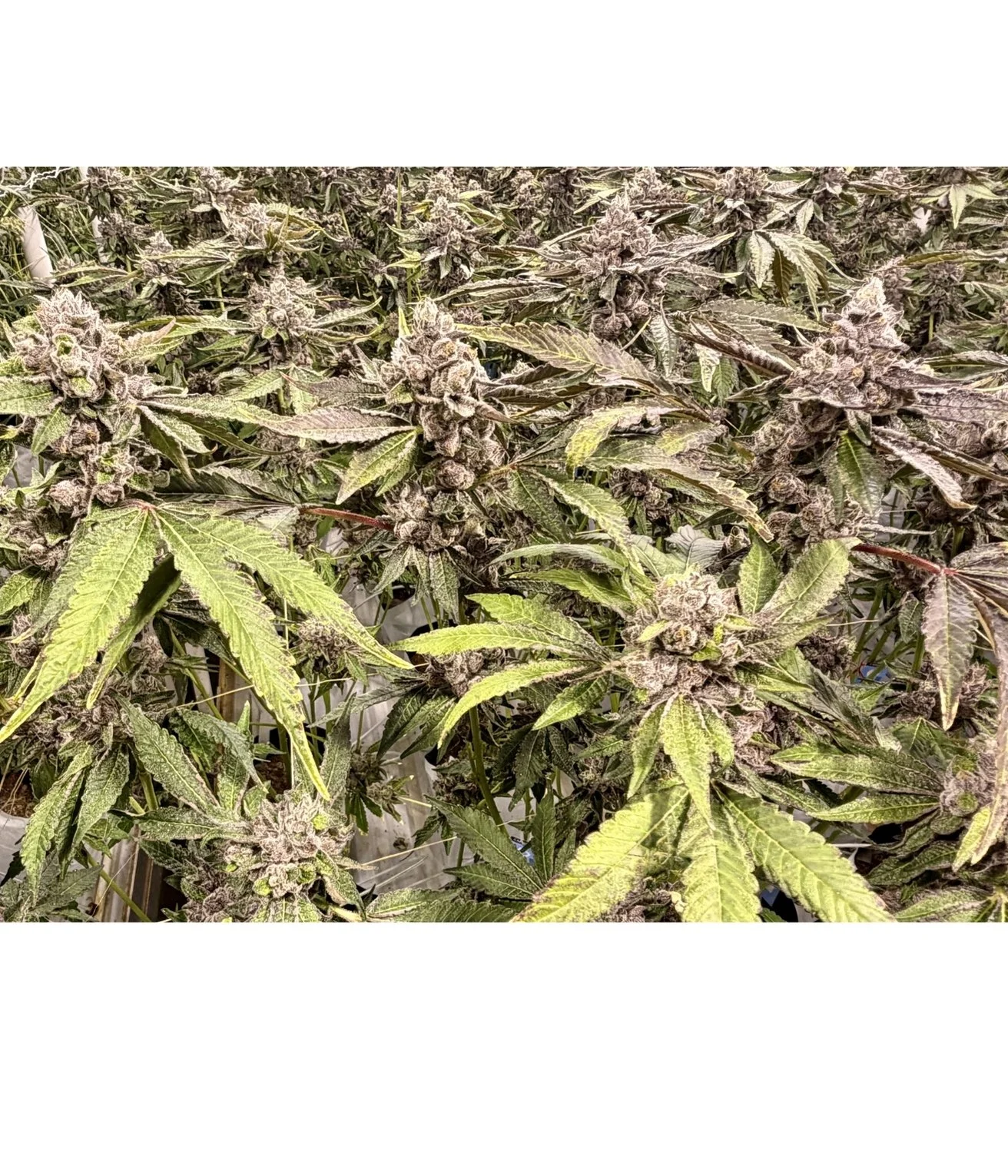
What We Do: Alongside nutrient curation, we drop daytime and nighttime temperatures. We also lower the humidity in the cultivation rooms
The Flavor Impact: High temperatures bake off the most volatile flavor compounds right on the vine. Our cold ripening technique locks these compounds deep inside the trichome head.
Why This Produces the Strongest Flavor
It Is Not Just Terpenes — It Is the Flavorants
While the rest of the market talks strictly about terpene percentages, we look at the whole picture.
The true magic behind a specific taste comes from secondary flavorants:
Esters and Alcohols
These create deep, complex sweet fruit notes.

Volatile Sulfur Compounds
These create the loud unmistakable gas and garlic profiles.

These compounds are incredibly delicate. When a plant is aggressively flushed and starved it undergoes extreme stress. This stress releases enzymes that break down fragile flavor molecules. Our curation method keeps the plant healthy enough to continuously manufacture and protect these flavorants until harvest.
The Synergy:
Post-Harvest Meets Pre-Harvest Curation
Flavor does not stop at harvest. The way we feed the plant during the final 30 days directly dictates how it behaves during the dry and cure.
Moisture Retention
Our plants are dynamically fed and never waterlogged or starved. Because of this, the cell walls maintain perfect structural integrity. This allows for a slow, uniform 14-day dry.
Eliminating Hay Smell
A starved plant dies on the vine and traps raw chlorophyll inside the bud. Our plants achieve peak maturity on the vine. This allows the chlorophyll to break down cleanly during the cure rather than turning into harsh ammonia flavors.
The Result
A clean white ash and an incredibly smooth exhale. You get a flavor profile that tastes exactly how the living plant smells
From Flush to Finish, Its All For The Flavor